
Taking Old Brown
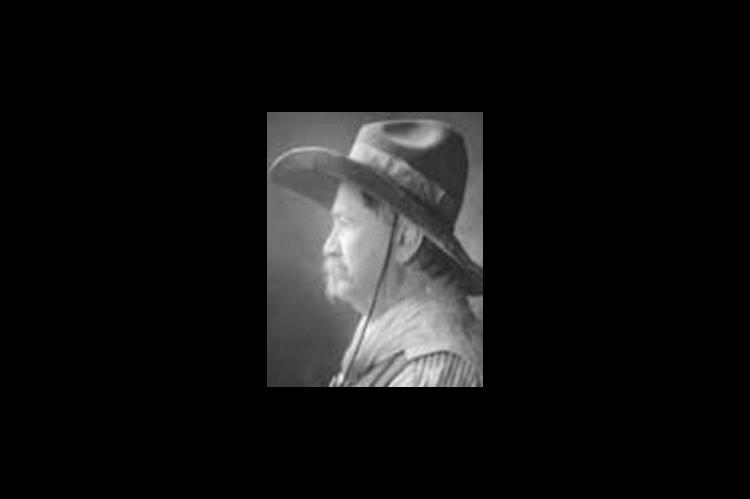
When abolitionists elected their own government under the Topeka Constitution in 1856, members of the “unauthorized” territorial government were indicted for high treason.
U. S. Marshal Israel B. Donaldson called for citizens to help execute the law. Sheriff Samuel Jones assisted in making arrests in Lawrence on April 23, 1856, with the help of federal soldiers.
That evening someone fired a shot into the military tent striking Sheriff Jones in the back. Though newspapers reported his “murder,” Jones survived the dangerous wound.
Men in southern states soon responded to Marshal Donaldson’s call. Militias were formed and began to arrive in support of federal authorities in Kansas Territory. A miraculously recovered Sheriff Jones led a citizen’s army in “The Sack of Lawrence” on May 21, 1856.
Abolitionists did not fight back but passively watched as their town was looted and burned.
To the south, several militia units assembled to go to the defense of Lawrence at Prairie City (southeast of present-day Baldwin City, Kan.), but broke up and returned home after learning that the ruffians were no longer there. That did not sit well with John Brown, who was furious at the thought that Lawrence men had refused to fight back.
Brown turned toward Dutch Henry’s Crossing on Pottawattamie Creek (near present-day Lane, Kan.). There pro-slavery men had threatened to sweep all abolitionists from their midst. With a small group of handpicked men including his sons, Brown struck with a vengeance, The brutal murder of five men drew the attention of the federal government.
Capt. Henry Clay Pate, commander of the Westport Sharpshooters, was commissioned deputy United States marshal before his unit joined a mission into John Brown’s territory.
Pate was an incredibly self-important 24-year-old who had left the University of Virginia before graduating. The lack of a degree did not deter him from publishing “The Companion of Youth, and Guide to College.”
In 1855, Pate led a party of Virginians to Westport, Mo., where he established himself in the newspaper business.
The search for “Old John Brown” began on Pottawattamie Creek. John Brown Jr. and his brother Jason were taken captive but “Old Brown” was nowhere to be found.
The U.S. Marshal sent the prisoners with Pate to a new camp a few miles northeast of Prairie City. Palmyra, Kan., a stop on the Santa Fe Trail, was a short distance northwest of Pate’s camp. Several men were arrested, causing extreme alarm in the surrounding communities. Capt. Samuel T. Shore sent word of Pate’s presence to Old John Brown and with his Prairie City Guards searched in vain for Pate.
At Prairie City, citizens learned that Dr. William Graham, a member of the town company, had been taken captive at Palmyra.
Members of the Prairie City Guard were in church Sunday afternoon, June 1, when a watchman alerted the congregation.
“The Missourians! They are coming!”
Capt. Shore and his men sprang from the pews and retrieved their rifles stacked near the door. The riders, emboldened by their recent successes, were taken by surprise.
Facing an army of raised rifles four men immediately surrendered. Two riders at the back of the line turned tail and successfully escaped as bullets tore up the dust around them.
The captured men were induced to reveal Pate’s location along a small creek in a grove of Black Jack trees southeast of Palmyra. Old John Brown and his Osawatomie Rifles arrived late in the evening and preparations were made for battle.
Shore and Brown attacked Pate early the next day. The tall prairie grass and the banks of the creek provided protection for both sides, but when ammunition ran low Shore’s men weakened and many deserted.
Brown, with approximately 30 men, was badly outnumbered. Hoping to stall while Shore rounded up his company, Brown ordered Shore’s remaining sharpshooters to kill Pate’s horses and mules. From Pate’s position a figure frantically ran toward Brown’s line. It was Dr. Graham who breathlessly told Brown that he could win the day if he persisted. From a position to the south Fredrick Brown called to his father, “We have got them surrounded, and have cut off their communications.”
The ploy worked. Although possessing a superior force of 75 men, Pate sent a flag of truce to Brown by way of his lieutenant, Henry James and one of the captives taken in the recent raids. Without horses Pate’s men were pinned down. Pate was requesting a meeting. Old Brown held Lt. James and allowed the captive to return, agreeing to meet Pate between the lines.
Upon Pate’s arrival Brown demanded surrender. Pate told Brown that he would consider it after he had returned to his company and consulted with his men. Suddenly, in violation of the truce, Pate was taken captive by armed men hiding in the tall grass. His men quickly surrendered and the Battle of Black Jack, was over.
Henry Clay Pate later wrote “I went to take Old Brown, and Old Brown took me.” It was a hard lesson for a young man to learn, on The Way West.
“The Cowboy,” Jim Gray is author of the book Desperate Seed: Ellsworth Kansas on the Violent Frontier, Ellsworth, KS. Contact Kansas Cowboy, 220 21st Road, Geneseo, Kan. Phone: (785) 531-2058 or kansascowboy@kans.com.