
They called him Capt. Jack
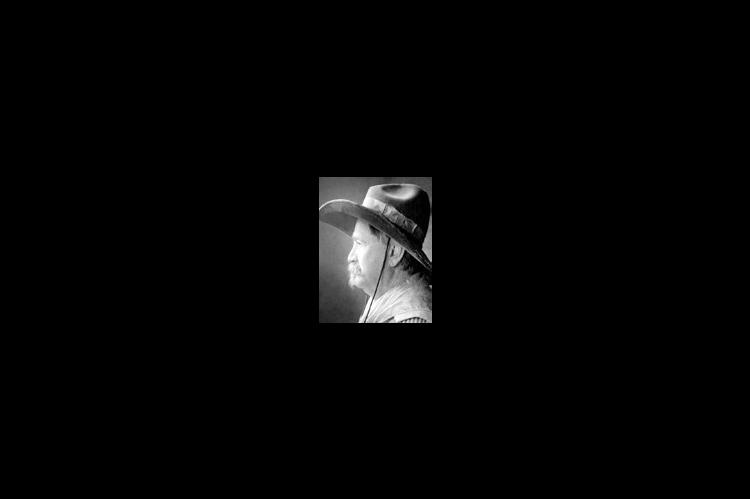
Originally from Eugene, Vermillion County, Ind., Oren Arms Curtis was born to William and Parmelia Curtis on June 1, 1829. Oren was the first of 14 children — seven sons and seven daughters.
Coming to Kansas in 1856, Oren went to work for Louis Pappan at his popular ferry at the Kansas River between Indianola north of the river and Topeka on the south bank. Oren was a natural for the ferry business. His old Indiana home was situated on the Vermillion River just above the confluence with the Wabash River. Oren grew up running boats on the Wabash. The family farm along the Vermillion was known as Curtis Landing.
At Pappan’s Ferry, young Ellen Pappan eventually caught Oren’s eye. The Pappan family was Catholic and Ellen had attended the convent at St. Marys, Kan. Their eventual marriage in 1859 was performed in a ceremony at St. Marys Immaculate Conception Church.
Oren assumed operation of the ferry following their marriage. Tolls at the ferry averaged about $50 daily. Some days he might take in only $5, while a very good day might pocket $280. It was said that often Oren “had to go to his house and empty his pouches of silver for fear that an accident or a capsize might cause the weight in his pocket to carry him to the bottom of the river.”
Oren and Ellen had two children, Charles (1860) and Elizabeth (1861). Their son Charles Curtis would go on to become vice president of the United States in Herbert Hoover’s administration.
Tragically, Ellen passed away in April 1863 from what was described as black fever, believed to be cholera. If ever there was a time for Oren to change his course in life, it was the summer of 1863.
He was married on Monday, July 27, 1863, to Rachel Funk. One wonders if it wasn’t a marriage of convenience with Oren’s children needing a mother, but Oren’s real moment of change arrived when rebel bushwhacker William Clarke Quantrill raided Lawrence on Aug. 21, 1863. Oren moved without hesitation to organize the Indianola Cavalry. The Topeka Tribune reported the very next day that Oren had recruited, mounted and armed his company “in the space of a very few hours.”
After organizing the company, Captain Curtis formed his men in line on the Indianola main street. Riding out in front of them, he delivered the following speech: “Now gentlemen, I want you to follow me. There’s no place where Jack Curtis das’sent go.” That was the first that the papers recognized his nickname of Jack.
In fall 1863, the Indianola Cavalry was mustered in at Leavenworth to the 15th Kansas Cavalry as Company A. Oren’s men tagged him Capt. Jack, a name for which he would be known the rest of his life. During the next several months, Company A performed guard and scout duty, involving a few skirmishes at various places in eastern Kansas.
In October 1864, the 15th moved into Missouri to confront Confederate General Sterling Price in his bid to push the Union out of the state. Near Lexington, Mo., on Oct. 19, Capt. Jack moved his troopers forward rapidly and soon became actively engaged with the rebel advance. The enemy was 400 strong, but they were driven back to the safety of their columns.
“The skirmishing was sharp and severe, firing small arms being continuous while a howitzer was used with considerable effect.”
In the heat of battle, Capt. Jack and his men were cut off from the main force retreating from Lexington. His men had to fight their way to safety, and he was now rather anxiously looking for his friends. Recognizing the commander of the approaching squadron, he challenged him with, “Hello West, where are you going?”
“Going to Lexington,” Capt. West said. “Curtis, going down into his pocket in a business sort of way, remarked, ‘I have a hundred dollar note to say that you ain’t.’” Capt. Jack’s explanation of the situation saved the West from being captured.
Meantime, during a 30-day leave from his command, Capt. Jack was divorced from Rachel Funk on Dec. 19, 1864, and married to Lucy Ann “Lou” Jay on either Dec. 25 or 28, 1864, at Olathe, Kan. A daughter, Permelia Theressa “Dolly” Curtis, was born to the couple on March 24, 1866, which explains the divorce from Rachel and the speedy marriage to Lou.
Capt. Jack was charged with crimes that occurred in November 1864 near Cane Hill, Ark. In April 1865, Capt. Jack was found guilty of manslaughter in the fourth degree over the death of a man in his custody. He was dishonorably discharged on April 27, 1865, and sentenced to one year in prison. His commanding officer, Colonel Charles R. Jennison, recalled the day he fought to rejoin the command: “The action of Captain Curtis in cutting his way through and joining his command should entitle him to something better than a cell in the Missouri penitentiary and zebra pants.” Perhaps that led to Capt. Jack being paroled after only a month in the Missouri State Penitentiary.
Capt. Jack may have been taken down a notch or two, but he certainly wasn’t done. Surprisingly, his story has never fully been told. Return with us next time to learn more about the man they called Capt. Jack on The Way West.
“The Cowboy” Jim Gray can be reached at 220 21st Rd., Geneseo, KS 67444, (785) 531-2058 or kansascowboy@kans.com.