
Uncle Chet Thomas
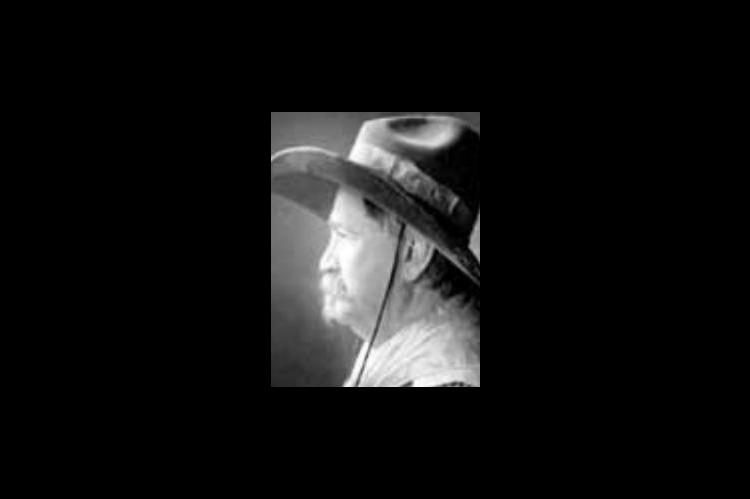
Upon his death, April 1, 1891, Chester Thomas was eulogized for his efforts in the advancement of the state of Kansas.
Thomas had very little formal education, but that did not stop him from being one of the most influential men in Kansas throughout his life.
The editor of the Topeka Daily Capital noted, “Mr. Thomas received from nature fine physical and mental powers. They were made, not for show, but for use. He was said to have an intuitive knowledge of men and was comfortable in any setting, identifying with the people that he lived and worked with.”
The Daily Capital editor continued, “He possessed in large degree that prime quality, fidelity to his friends. Those associated with him could depend upon him for prudent and faithful co-operation. These and similar characteristics of Uncle Chester Thomas account for the fact that he is missed and mourned in Kansas.”
Chester Thomas was born in Troy, Bradford County, Pa., on July 18, 1810. After reaching manhood he held the office of sheriff in his native county. Thomas became an ardent supporter of the Democratic Party but switched to the newly developing Republican Party when the Democrats tried to force the extension of slavery into the western territories.
When Kansas Territory became a hotbed for radical anti-slavery reform and germinating political action, Chester Thomas removed to this state in 1858. Thomas and James H. Lane became fast friends, significantly influencing the political process in Kansas, Lane as a United States senator for the state, and Thomas as the United States mail agent appointed by President Lincoln.
Thomas was an ardent proponent for Topeka as the capital of Kansas. As the U.S. mail agent Thomas traveled to farflung communities establishing mail routes, and quite naturally speaking for Topeka. A vote of the people ratified Topeka as the state capital on Oct. 4, 1859.
Thomas served throughout the Civil War as assistant quartermaster at various locations, returning to his beloved Topeka at the close of the war. Once again, he left his indelible mark on the city when through his friend Sen. James H. Lane, the Union Pacific Railroad, Eastern Division was coerced to change the course of construction to present-day North Topeka.
Thomas became a director in the Atchison, Topeka, and Santa Fe Railroad and in the Kansas Valley National Bank. He became known as a speculator in the cattle business and associated with the likes of Col. Robert Hunter, who was rapidly building a reputation in the stock business. Thomas was 56 years at the time. Trailing cattle was a young man’s business, but Uncle Chet chose the hands-on approach of working with his herdsmen (cowboys).
The Oct. 12,1867, Topeka State Record reported that his herdsmen were chased into Fort Dodge and one of them, a Prussian man by the name of Ottoe Orlinsken, was killed by Indians. Thomas was in a tent less than a 100 feet from the murder.
In December 1868, he won a contract to supply beef to the government at Camp Supply, Indian Territory.
The editor of the Topeka Record wrote on Dec. 24, 1868, “If there is a man in the State that can fill such a contract, Indians or no Indians, snow or no snow, he is the man. He has all the energy of a young man, and the prudence and sagacity of an old one. He leaves for Fort Cobb in two or three days.”
The Topeka Weekly Commonwealth revealed its hometown bias for the popular Uncle Chet in a report for the June 16, 1869, edition. “The government has established a road from Fort Riley and Harker and Medicine Creek Bluff (Fort Sill) on the Chism (Chisholm) trail. — Col. Thomas was the first white man who ever traversed the route in years gone by — It is 530 miles from Harker to M. C. Buffs. The new road is covered with government wagons, westward bound, to supply the extreme frontier posts. — 10,000 Texan cattle passed through Wichita while the Captain was there. — cattle bound to various points on the K. P. R. R., to be shipped thence to Eastern market. — No Indians in that section. — Chet sent 500 head of cattle to Camp Supply, got through safe. — Chet furnishes all the world down there with cattle.”
If anyone could get through it was Uncle Chet. He was once surrounded by Osage warriors while traveling down the Chisholm Trail on a buying trip to Texas. After an hour’s parley with the Indians Thomas pointed out that the repeating rifles carried by his men would kill at least 10 or 20 warriors and declared, “We are not going to be captured.” And so, Uncle Chet and his men were allowed to proceed down the trail without any further harassment.
The life and times of Uncle Chet Thomas could easily make an interesting book. For now, we will have to be content with the short version from The Way West.
“The Cowboy,” Jim Gray is author of the book Desperate Seed: Ellsworth Kansas on the Violent Frontier, Ellsworth, KS. Contact Kansas Cowboy, 220 21st Road, Geneseo, Kan. Phone: (785) 531-2058 or kansascowboy@kans.com.