
Unfolding leaves
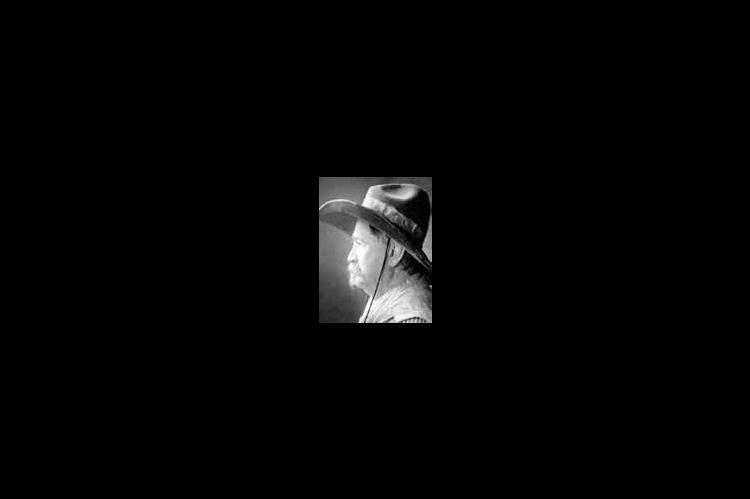
Preston Plumb was born Oct. 12, 1837, at Berkshire, Delaware County, Ohio. His proud parents were David and Hannah Maria (Bierce) Plumb.
David Plumb was a wagon maker.
The schoolmaster at Berkshire boarded with the Plumbs, and when Preston was only 4 years old, the schoolmaster offered to take the youngster with him to school. Just as the schoolmaster expected, Preston “fell to work just as he saw the other pupils doing ... (and) made good progress.
Whatever was put into his hands he mastered.”
Preston’s daring was exhibited in an early spring experience that gained him a new nickname. The ice on the pond near the schoolhouse that had been a favorite for skating was beginning to melt and break up into blocks.
Showing a reckless spirit, the boys made a challenge out of crossing the pond by jumping from one block of ice to another. As the blocks grew smaller and further apart, the boys concluded that the sport of ice crossing was over, but Preston declared he could cross one more time.
Sprinting toward the pond, he bounded lightly from one fading piece of ice to another, all the way to the other side.
The feat reminded the others of a picture of Bonaparte crossing the Alps in McGuffey’s Third Reader, bringing cheers and shouts of “Bonaparte has crossed the Alps!” From that time forward, his friends called him “Bony.”
Preston was not blessed with a middle name at birth, but in later years, he added the initial B. without explanation, perhaps for his mother’s family name, Bierce, or as his friends suspected, for Bony’s crossing of an icy lake.
“He never explained, but “invariably signed his name, P. B. Plumb.”
At age 10, a near-tragedy at a Fourth of July celebration almost ended his life. Swings for the children had been attached to the rafters of the barn.
Incredibly, the swings were placed near the cage of two pet bears.
While pushing a swing, Preston slipped and fell.
In an instant, one of the bears grabbed him. In that terrifying moment of snarls, claws, piercing teeth and the scent of blood, the two bears fought, allowing Preston to roll to safety. Severely injured, Preston was not expected to live, but did recover. He carried the scars of tooth and claw on his body for the rest of his life.
By the summer of 1849, Preston had exhausted all of his local educational opportunities. At almost 12 years of age, he gained a position in Kenyon College, paying his way by working in the college printing office. With three years of experience under his belt, Preston apprenticed in the office of the Marysville, Ohio, Tribune in 1852. The paper was failing at the time and suspended operation the following year. But in failure, there was opportunity.
Preston and partner J.
W. Dumble purchased the paper and moved the equipment to Xenia, Ohio. The Xenia News was born on Feb. 24, 1854. Preston Plumb was 16 years old.
Plumb excelled as a master pressman, intelligent, energetic and industrious. The Xenia News found success in the trying political upheaval of national politics. Divisions had broken the Whig Party and split northern Democrats from southern Democrats. The National Republican Party was organized in 1856 amid the absorbing question of extending slavery into Kansas Territory. P. B. Plumb left no doubt as to his position on the issue.
Following a June 14, 1856, meeting in the aftermath of the “Border Ruffian” sack of Lawrence, Plumb wrote, “It is the duty of all who have the means to spare to devote them at once to this sacred cause.” This was Plumb’s “hour of fate.”
William Connelly wrote in “The Life of Preston B. Plumb, “When he heard the voice of Kansas pleading for justice, the crisis of life confronted him.” Going to his partner, Plumb declared, “Joe (Dumble), I am going to Kansas and help fight this outrage down, or die with the Free-State men.”
Plumb left at once for Cincinnati, taking a boat to St. Louis. From there he traveled by rail to Jefferson City where he boarded a steamer on the Missouri River.
Pro-slavery sentiment could be found in “upwards of 20 pieces of cannon, of different sizes, stationed along the river bank ... at different points, and all of them being posted there for the same avowed object — that of preventing companies of ‘Abolitionists’ from going into the Territory of Kansas.”
At Liberty Landing, Mo., they were told that immigrants from Illinois had been tried at Leavenworth “for treason against the United States.” They were put aboard the next boat for St. Louis and ordered never to return “under pains and penalties of death!”
Even so, Plumb continued on. Plumb wrote that at Leavenworth he set foot on Kansas soil on the “Glorious Fourth.” The city was beautifully located, “such as I cannot do justice to.” Even so, there was ugliness in the ruffians that were at the landing searching incoming boats for Sharpes’ rifles.
“A rougher-looking set of men I certainly never saw. They were about half-drunk and made the air ‘hideous’ with their blasphemy and imprecations.” He luckily evaded being tried as an abolitionist.
In the days to come, Preston B. Plumb watched as the leaves of history unfolded before his eyes, but further accounts will have to be told in other stories on The Way West.