
A Welcome Sight
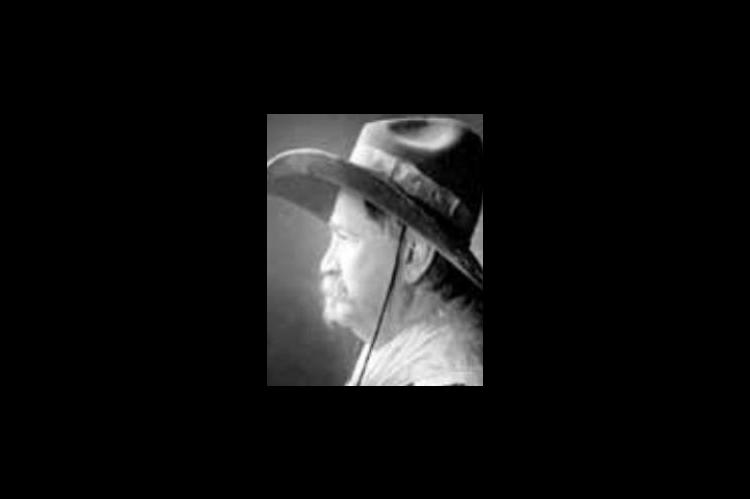
Early in 1864 the United States Army organized the 1st Volunteer Infantry, a regiment of Confederate prisoners of war mustered into service. The former rebels were pardoned and “galvanized” after taking the oath of allegiance to the United States. Richard W. Musgrove was appointed captain and took command of the regiment of Galvanized Yankees on April 24, 1864.
Richard Musgrove’s autobiography was published in 1921, offering wonderful insight into his Kansas experience. After several temporary assignments the 1st Volunteer Infantry was ordered west. The troops arrived at Fort Leavenworth in late October, 1864. The battalion was under the command of Lt. Col. William Tamblyn, who was to build the new post of Fort Fletcher. Capt. Hooper Straut was to establish a post at Monument Station, and
Musgrove’s destination was Pond Creek Station, 450 miles west of Fort Leavenworth in far western Kansas. All of the locations were along the Smoky Hill Route of Butterfield’s Overland Despatch, a newly established freight and stage line from Atchison, Kan., to Denver City, Colo.
The troops left Fort Leavenworth in the rain with the support of five wagon trains, making a total of 109 wagons filled with company supplies, tents, commissary, and quartermaster’s stores, as well as many wagons of lumber for constructing the posts.
The army wagons were drawn by six mules. “The driver of each team sat on the nigh (lest) wheel mule, and guided the animals by a single rein attached to the nigh leader. In his right hand he swung a long whip with such dexterity that he could plant a blow at any point desired, even on the heads of his leaders. The science of driving consisted of a series of jerks with the rein, a liberal use of the whip, and a constant stream of yells and oaths. Treated in this way the mule rarely failed to do faithful service wherever placed. He could be relied upon in two ways — as a willing worker and sure to let fly his heels whenever a person came within striking distance.” Following the military trail to Fort Riley the troops and wagons reached Indianola on the Pottawatomie reservation (north of Topeka) on Nov. 4, 1864. Musgrove recalled that the Pottawatomies were civilized.
“They cultivated the soil, raised small herds of stock, and lived in log houses ... St. Mary’s Mission, a Catholic insti tution, furnished facilities for an education. Polygamy was still practiced among them. They seemed happy and prosperous.”
Musgrove continued, “Much of the land on this reservation was low and marshy, and fever and ague prevailed to a wide extent.” Unfortunately, he also became ill and was forced to travel to Fort Riley by ambulance.
Following a short rest at Fort Riley the march continued through Junction City to Salina and the open prairie before them. In the heart of Indian country Colonel Tamblyn established Fort Fletcher, south of present-day Walker, Kan., on Nov. 20. An Indian camp had only recently been abandoned before their arrival. Two of the wagon trains, or about 50 wagons, were unloaded before beginning their return to Fort Leavenworth.
After another rest of a day or two, Company A under the command of Capt. Straut, and Company I under Capt. Musgrove, resumed their western march along the Smoky Hill River. The two companies were supported by 59 supply wagons.
Having found a favorable campsite on the river bottom and it being Sunday the troops went into camp at noon on Nov. 26. They settled in for a rest while the mules grazed on the lush river bottom grass. By mid-afternoon a report of Indians brought Musgrove out of his tent. From a nearby bluff he raised his field glasses to see a band of Indians “Swinging their blankets in the air and yelling like demons, they swept down upon the herd guarded by only a few teamsters.” The astonished herders offered no resistance. Within seconds 57 mules were stampeding over the prairie “in a wild fright.” Musgrove mounted his men on mules and charged in pursuit but soon realized the hopelessness of overtaking them.
With no mules for the nine wagons the supplies were loaded into the other wagons. They moved out with the wagons in parallel columns the next morning. Musgrove noted that a year later he saw the wagons still sitting where they were abandoned.
The covers were rolled back a few feet to allow two armed men to stand ready for attack. Within a few miles they encountered six men and two women fleeing the Castle Rock station of Butterfield’s Overland Despatch. Cheyenne raiders had run off the company’s livestock, while the men and women had made their escape on foot. North of Downer’s Station, nine miles to the east, burning buildings could be seen and screams of ranchmen being tortured could be heard. The evidence of torture was plainly seen when Musgrove reached Downer’s Station. After burying the victims Musgrove’s troops moved on. Within but a few miles three more victims were found, having evidently been caught in the open along the trail.
For 40 miles smoke signals could be seen in the distance, but the Cheyenne remained hidden. The column passed through immense herds of buffalo moving south. The Galvanized Yankees had been introduced to warfare unlike anything they had known in the great Civil War. Cavalry troopers at Monument Station were truly a welcome sight after a long, nervous day on The Way West.
“The Cowboy,” Jim Gray is author of the book Desperate Seed: Ellsworth Kansas on the Violent Frontier, Ellsworth, Kan. Contact Kansas Cowboy, 220 21st Rd. Geneseo, Kan. Phone (785) 531-2058 or kansascowboy@ kans.com.