
William Becknell’s Gamble
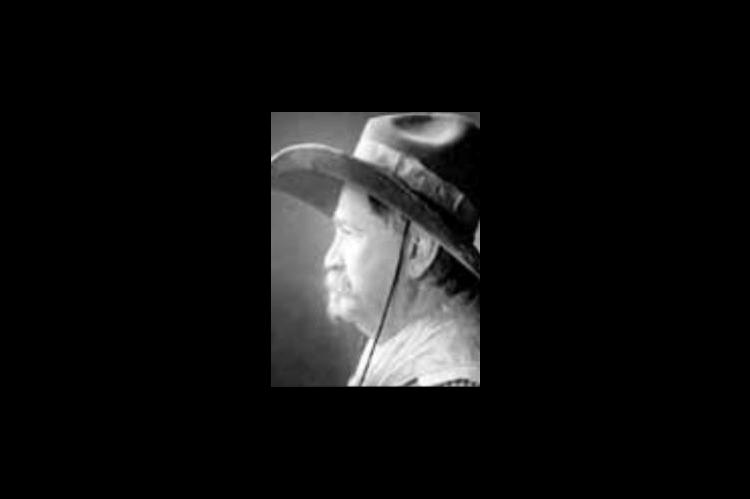
William Becknell is famously remembered for blazing the Santa Fe Trail in 1821. Of course, there is always more to the story. He was actually fairly well-known before going to Santa Fe, and as in so many success stories Becknell had experienced both victory and failure in his endeavors.
Born in Virginia in 1788, Becknell was living on the frontier in 1813, at Franklin, Mo. He joined Calloway’s Rangers as a sergeant when Sac and Fox tribes (British allies) threatened the frontier. Captain James Calloway, grandson of Daniel Boone, led the company of 39 men including Daniel Boone’s son, Captain Nathan Boone.
Becknell returned to Missouri in 1815 having reached the rank of captain during the war. From his small farm he traded horses and operated a freighting business. Expanding operations, he purchased Boone’s Lick, producing salt from salty spring water.
By 1820 Becknell had become a wealthy man even though the country was in the middle of an economic panic that had begun in 1819. Most of his fortune was in various businesses, land, and livestock. Even as the panic deepened he grew his business ventures, keeping little cash on hand.
The Missouri Territory was seeking statehood as the 24th state of the United States and Becknell aspired to gain a seat in the new Missouri House of Representatives, but with little available cash he borrowed money for his campaign. When he lost the election in August of 1820 banks were “calling in” their loans, leaving Becknell extremely vul nerable. Unable to immediately repay his debt the former war hero was placed in debtor’s prison. He was released on the condition that he repay his debts by 1822. Given his standing in the community Becknell was surely embarrassed and reportedly outraged at having been jailed.
However, events beyond American borders were about to change Becknell’s fortunes. The citizens of Mexico were fighting to overthrow Spanish rule. Spain had outlawed trade with Americans on the frontier. Early attempts at trade in Santa Fe had led to confiscation of merchandise and imprisonment. The Mexican War had begun 11 years before on Sept. 27, 1810, sparked by a cry for independence from Spain by Catholic priest Miguel Hidalgo. Now that Independence seemed to be within reach American traders would be welcome in New Mexico.
In the uncertain atmosphere Becknell wisely chose not to publicize his intention to gamble on accepted trade in Santa Fe. He posted a notice in the June 25, 1821, Missouri Intelligencer, announcing the organization of a company of men “destined to the westward for the purpose of trading for Horses & Mules, and catching Wild Animals of every description...” Organizational meetings were held Aug. 4 and Aug. 18.
Meantime, a letter in the Aug. 14, 1821, Edwardsville, Ill. Spectator stated that “patriots” were in control of the whole of Mexico, except Vera Cruz. Mexico was about to oust its Spanish oppressor. Vera Cruz “would also soon be compelled to follow the example.”
Becknell’s company of five men crossed the Missouri River at Arrow Rock, just west of Boone’s Lick on Sept. 1, 1821. The Treaty of Cordoba had been signed on Aug. 24, 1821. Leading pack horses laden with trade goods, they couldn’t have known that Mexico had already gained independence.
They reached the big bend of the Arkansas River (near present-day Ellinwood, Kan.) on Sept. 24. According to Becknell’s account, “The Arkansas at this place is about three hundred yards wide, very shallow, interrupted by bars, and confined by banks of entire sand ...” A day later they crossed the river traveling along the south bank. The route stayed on the north bank in later years.
Becknell was not blindly crossing an unknown desolate prairie. Many frontiersmen had ventured all the way to the mountains to trap and trade with the native tribes. His description of travel on Sept. 29 reveals prior knowledge. “At about one o’clock found ourselves on the celebrated salt plain of the Arkansas. It was about one mile wide; its length we did not ascertain. Its appearance was very different from the idea I had formed from the several descriptions which I had seen.”
Nearly a month later, Oct. 21, they reached the Purgatoire River (near present-day Las Animas, Colo.) Turning south they were soon in the mountains. The dangerous passage through nearly insurmountable cliffs caused one horse to fall to its death.
Regaining the open plain, they met Mexican troops after two weeks travel and arrived in Santa Fe on Nov. 16, 1821. The traders were well-received. They quickly sold their goods and Becknell set his sights on Missouri, leaving Santa Fe on Dec. 13.
At Franklin, Mo., on Jan. 20, 1822, Becknell made a point of slicing open a rawhide bag with his knife, spilling silver coins before his creditors. William Becknell’s gamble not only succeeded, his historic gamble opened the celebrated Santa Fe Trail on The Way West.
“The Cowboy,” Jim Gray is author of the book Desperate Seed: Ellsworth Kansas on the Violent Frontier, Ellsworth, KS Contact Kansas Cowboy, 220 21st RD Geneseo, KS Phone (785) 531-2058 or kansascowboy@kans.com.