
Without a Whimper
The 1886 creation of Seward County in southwest Kansas brought immediate conflict over the location of the county seat.
Near the center of the county the citizens of Fargo Springs and Springfield huffed and puffed as armed men threatened one another with “words of profanity:’ After Kansas Gov. John Martin awarded the temporary county seat to Springfield, the county seat bounced back to Fargo Springs before being returned to Springfield.
Meantime the Chicago, Kansas, and Nebraska Railway Company, an affiliate of the Rock Island Railroad, decided to bypass both towns, leaving them “high and dry” without railroad access.
The railroad built the town of Liberal near the southern border of Seward County. Even though it was far from the center of the county, Liberal was by far the most successful town in the county.
If all of this sounds familiar, The Way West has imparted much of the Seward County conflict in previous columns. How Liberal became the county seat is a story filled with violence, intrigue, and political maneuvers, some of which originated in another county seat conflict in nearby Stevens County.
The folks in Seward County were not shy in declaring support for either Hugoton or Woodsdale for the Stevens County seat. That support readily spilled over into the Seward County conflict between Fargo Springs and Springfield.
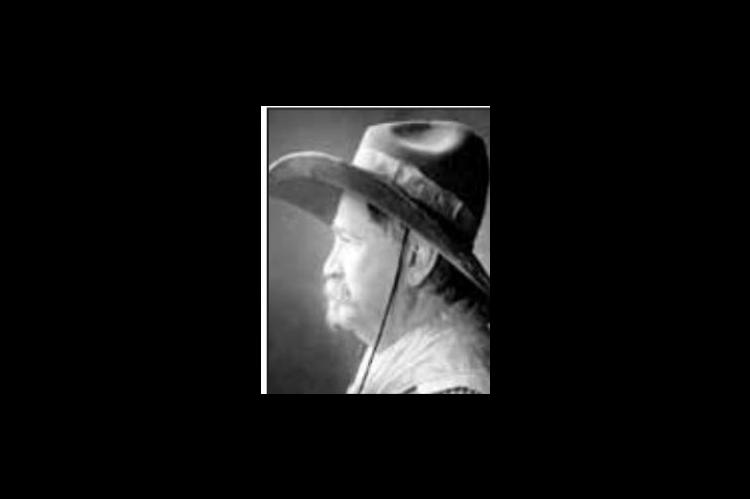
Sam Wood, the founder of Woodsdale in Stevens County, was celebrated as a member of the anti-slavery Free State movement during the dramatic Kansas Territorial days.
In 1859 he established the Kansas Press newspaper at Cottonwood Falls, and during the Civil War served as Captain in the Second Regiment, Kansas Volunteer Infantry under Maj. Gen. John C. Freemont in Missouri and Arkansas.
In Seward County, Springfield’s partisans backed Wood and his town of Woodsdale in its quest for the county seat next door in Stevens County.
Ironically, one of Fargo Springs’ most ardent supporters, Theodosius Botkin, lived closer to Springfield. His farm was three-and-a-half miles southeast of Springfield. After serving in the 44th Ohio Volunteer Infantry during the Civil War, Botkin gained a law degree and moved to Kansas. When Stevens and Seward counties were organized Botkin was appointed district judge with jurisdiction over both counties. In spite of the location of his farm, Botkin favored Fargo Springs in Seward County and in turn favored Hugoton in Stevens County.
When the railroad missed Fargo Springs a large contingency of that town moved to Arkalon, a new town plated where the railroad crossed the Cimarron River. Like Fargo Springs, Arkalon wanted the Seward County seat and continued the cause for Hugoton in Stevens County in opposition to the towns of Springfield and Woodsdale.
Armed men were bound to bring violence. South of Stevens County in “no Man’s Land: five Woodsdale men, including Stevens County Sheriff John Cross were killed in an ambush in July of 1887. Then Sam Wood was gunned down in the streets of Hugoton on June 21, 1891. He was buried with great ceremony in the family plot at his former hometown of Cottonwood Falls. Each death sent shock waves across Stevens and Seward counties, but the differences between the factions only festered.
Attention turned to Judge Botkin who many believed had orchestrated Sam Wood’s assassination. A Woodsdale citizen informed Botkin on Dec. 20, 1891, that an assassination plot had been planned by his neighbors at Springfield. Judge Botkin was scheduled for open court in Springfield on Jan. 5, 1892. The assassins planned to ambush Botkin as he passed through the sandhills on his way to Springfield.
Botkin notified Seward County Sheriff Samuel W. Dunn and asked him to investigate. Dunn soon learned that the attack was to take place at the head of a canyon, “a natural ambuscade one-and-a-half miles from Botkin’s home.
Sheriff Dunn and his posse of six men stayed in the Botkin home Monday night, Jan. 4, 1892. The following morning the posse set out ahead of Botkin to clear the way through the sandhills and found a party of 40 to 50 men blocking the way. Dunn called out, “I am the sheriff and demand peace.” Two shots split the air. Sheriff Dunn was dead before he hit the ground. His posse fled into the sandhills and the assassins returned to Springfield without doing harm to Judge Botkin.
Thus ended the violence of the Stevens and Seward County Seat wars. Hugoton won the Stevens County seat, whereas the death of Sheriff Dunn sealed the fate of both Springfield and its opponent Arkalon. Botkin resigned from the bench the following October. Liberal had stayed out of the fight, giving the town a higher standing among the peaceable citizens of the county. A petition was circulated to move the county seat from Springfield to Liberal and on December 10, 1892, the county records were moved to Liberal without so much as a whimper on The Way West.
“The Cowboy,” Jim Gray is author of the book Desperate Seed: Ellsworth Kansas on the Violent Frontier, Ellsworth, KS Contact Kansas Cowboy, 220 21st RD Geneseo, KS Phone 785-531-2058 or kansascowboy@kans.com.