
Excessive heat prompts schedule changes for local athletic teams
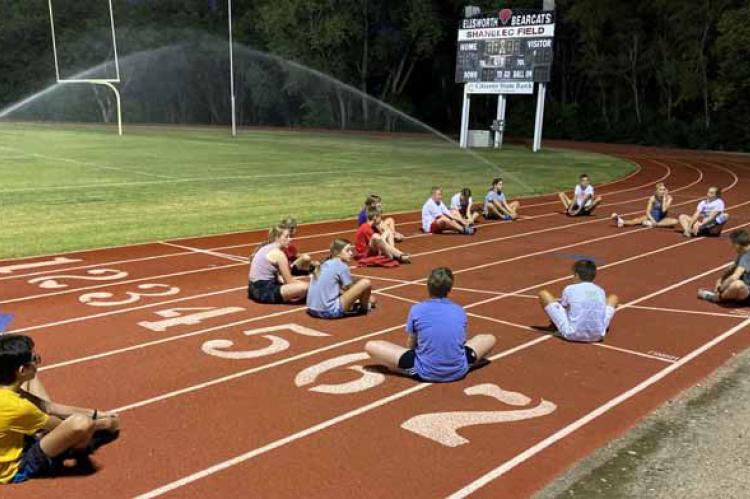
Temperatures that top triple-digits for nearly a week resulted in adjustments for Ellsworth Jr./Sr. High School athletic teams.
“It is common in August and September for coaches to have to make adjustments to practice times and schedules due to the heat,” Athletic Director Ron Davis Jr. said. “What isn’t typical is running into seven straight days of 100-plus degree heat and not getting a reprieve from it.”
Each KSHSAA member school has a wet bulb globe temperature device to reliably read heat.
Practice schedules were altered and a few games adjusted or canceled.
“The entire state of Kansas has been impacted by the heat this week, so time changes and rescheduling of activities have taken place,” Davis said.
He opted to cancel the junior varsity tennis meet scheduled for 3 p.m. Aug. 24. It was moved to Monday, Aug. 28.
“A later start was not an option because you are looking at moving a 3 p.m. start time to what has been a 7-7:30 p.m. potential start time when the WBGT has been getting a safe reading with modifications,” Davis said. “A tennis meet typically takes five-plus hours to complete.”
Practice schedules were shifted, many to 6 a.m., to accommodate the heat.
Head Tennis Coach Eric Anderson has been coaching girls’ tennis for 23 years. He said heat is something that his team has to adjust for every year.
“I do not think that it will affect how we play in at a tennis meet,” he said. “If anything, I think it helps our cause because our players are more focused because of the shortened practice time.”
Head Football Coach Josh Homolka said the adjustment to 6 a.m. practice came with some obstacles.
“The challenge was lack of light in the mornings for the start of practice. Being this early in the season, we did not want to use the game field which has lights and tear the field up,” he said.
Head Cross Country Coach Eric Coonrod faced similar issues.
“Since we typically run streets, country roads and the golf course, we’re limited in the mornings to city streets with little traffic and some street lights,” he said. “Last year, CATS Pride made a purchase of light-up vests for the runners to wear on dark morning runs, and those definitely got used a lot last week.”
Homolka said the early practice, coupled with full days of school, have been difficult for students.
“I do think you could see a bit of an affect right about day three of 6 a.m. practices,” he said. “Our student body in general is very involved in numerous activities, jobs, extracurricular activities, teacher aides, clubs. You name it, our students are involved.
“You could just see they were a bit more tired mentally and physically. We also are breaking in a new schedule with a modified block, so Wednesday and Thursday were longer class periods.
“None of this I view as a bad thing. I am really proud of how all of the student athletes adjusted and never complained. I view our students as very motivated and hard working group as a whole.”
Coonrod agreed the early-morning practices were an adjustment.
“The challenge is to make sure the morning miles are worthwhile,” he said. “It’s a little tough to get going sometimes, especially after several days of 6 a.m. practice followed by full days of school and the beginning of evening activities.”
While tough, the time adjustment was necessary.
“There are always grumbles about getting up early to practice at 6 a.m., but the players understand why we do it,” Anderson said. “The heat can really affect how a player plays on the tennis court (both mentally and physically) and is a health risk.
“We always talk to our players about staying hydrated, avoiding sodas/ coffees/energy drinks, monitoring themselves and others on the team, getting drinks when needed, plus we take breaks every 15-20 minutes.”
With heat, extra focus was spent on hydration and appropriate rest.
“Obviously, student health is first and foremost,” Coonrod said. “Heat-related injuries can sometimes affect a person long-term, and we want to make sure we don’t do something to jeopardize the kids’ health.
“From a sport standpoint, we have a short season, and any injuries can be a setback or even impact an entire season. Any afternoon practices we try to make sure there is plenty of water on the route, and Coach (Steve) Bolton and I both bike along with everyone to monitor how they’re doing as well.”
Homolka said the team has adjusted well to a fluid practice schedule.
“They were ready to go,” he said. “When you have a motivated group, situations on where and when to get better do not have a great affect, they just want to get better when they can.
“Heat in Kansas is part of the deal. Adjusting and acclimating is the key. Truthfully, adjusting for heat has been rather easy for our guys. This week’s heat was simply abnormal and extreme. Most of them have jobs in the summer out in the heat, so they were used to it.
“Also, with summer weight training, they are acclimated to the work load. When we have extreme temperatures we take frequent breaks and make sure we are getting hydrated. During the season we have a hydration station in the weight room. We also have a cold tub filled daily that is located by the practice field. If someone does have a heat related illness, we have been trained to get them cooled quickly.”
Davis said the only team to continue a normal practice schedule is the high school volleyball team.
“Since our EJSHS gym is air conditioned, volleyball has been able to escape the heat,” he said. “Normally, junior high volleyball practices at the city hall gym, but since it is not air conditioned, they have been practicing in the early morning at EJSHS and high school volleyball practices after school.”
Homolka said adjustments for heat are expected, but this year has been different.
“I have never seen where an entire week to 10 days had to be adjusted so teams could get their practices in,” he said. “This was a new issue I have never had to personally deal with.”
The heat rules apply to all schools in the state, and each has had to adjust as teams prepare for the upcoming season.
“KSHSAA has given much attention and consideration for heat related injuries/illnesses in the last few years, and while it may be inconvenient, it’s very appropriate,” Coonrod said. “Even before KSHSAA’s regulations though, USD 327 administration and coaches had monitored heat over the 20 years I’ve been here, and I recall altered schedules throughout the years.
“Many other school districts did that too, but it’s good that all schools are supposed to follow the same procedures.”