
Drought difficulty
By TERI L. HANSEN
Ellsworth County I-R
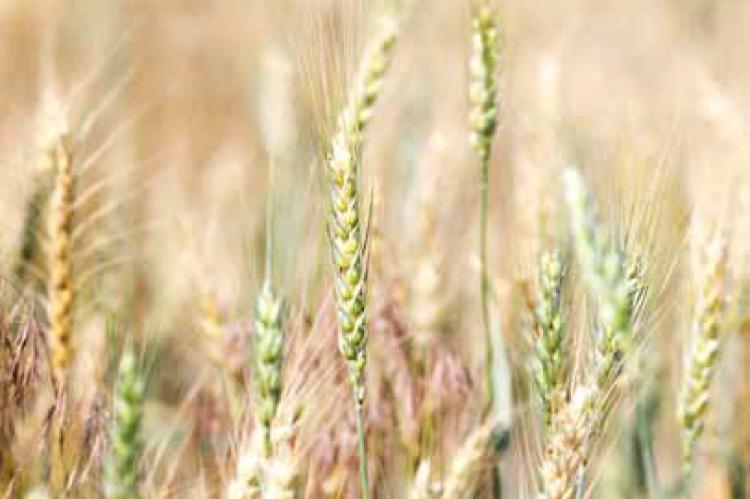
After months of praying for moisture, the recent rains across the state weren’t nearly enough to save the coming harvest according to the Midway Extension District. With only a couple of weeks before the winter wheat harvest, crops look patchy, plagued by too much green with short stalks.
The U.S. Department of Agriculture estimates wheat production will fall 20 percent compared to last year.
“It’s going to be a tough one,” Crop Production Agent for Midway Extension District Craig Dinkel said.
“With the drought conditions that we’ve had this whole last year, the overall yields are going to be well below average.”
Drought conditions have been a problem for most of the western half of the country; middle America has been hit particularly hard.
According to the U.S.
Drought Monitor, 60 percent of Kansas is experiencing “extreme” or “exceptional” drought conditions, with only 13 percent of the state, concentrated in the northeast, completely without drought.
Kansas Wheat estimates that a quarter of Kansas wheat fields may be abandoned due to the terrible condition they are in.
“There’s a lot that won’t get harvested this year,” Dinkel said. “It’s too late for the wheat crop, especially in Ellsworth County, to be saved by the rain.”
While an estimated 8.1 million acres of wheat were planted in the fall, the Kansas wheat crop has suffered from a multi-year drought, which has robbed the state’s yield potential and resulted in many abandoned fields according to Kansas Wheat.
The official projection for total production across the
“It’s going to be a tough one. With the drought conditions that we’ve had this whole last year, the overall yields are going to be well below average.”
Craig Dinkel
Crop Production Agent for Midway Extension District state from the recent Kansas Wheat Tour is 178 million bushels, indicating that tour participants thought abandonment might be quite a bit higher than normal at 26.75 percent. The production number is the average of estimated predictions from tour participants who gathered information from 652 fields across the state. The tour is sponsored by the Wheat Quality Council.
“Rains coming now are coming too late,” Dinkel said.
The USDA estimated Kansas would produce closer to 191 million bushels. This is still a big decrease from last year’s harvest of 244 million bushels. While they expect a growth of 2 percent nationally, that growth is coming from elsewhere as the Kansas production is expected to drop by almost 20 percent.
“We definitely wish there was more rain, but earlier,” Ellsworth Co-op General Manager Riley Zamrzla said. “It’s definitely worse than normal.”
Decisions will have to be made. Farmers will have to look at what is economic. They need to plan for next year, which will also be impacted by the severe conditions of this year.
“A decent amount of acres won’t get harvested because they won’t be economical,” Dinkel said. “It is going to be a very tough year for farmers, which will put a lot of pressure on next year due to seed wheat. Farmers can’t save enough, which will create more issues for this coming fall.”
It is likely that harvest will start in the next couple of weeks as the warm weather will turn the fields into amber waves of grain, whether poor or healthy. Summer safety includes farmers during this trying time.
“You can already see the fields turning, trying to do what it can,” Dinkel said. “Just continue to be mindful of harvest. Be mindful of tractor traffic. Don’t be in a hurry. I,f you can’t pass sit back and wait.”