
From the files of the Independent-Reporter
From the files of the January 26, 2012 Conservation Issue of the Ellsworth County Independent-Reporter.
RATHBUN ADDS
GRASSLAND AWARD
TO RECOGNITIONS
Although Jack Rathbun of Ellsworth has won several conservation awards in Ellsworth County down through the years, being selected to receive the grassland award still came as a big surprise to him.
“I think there are other people who deserve the same award that I’m getting,” he said.
Rathbun has a long relationship with grassland. His farm, on which his son, Kendall, operates a
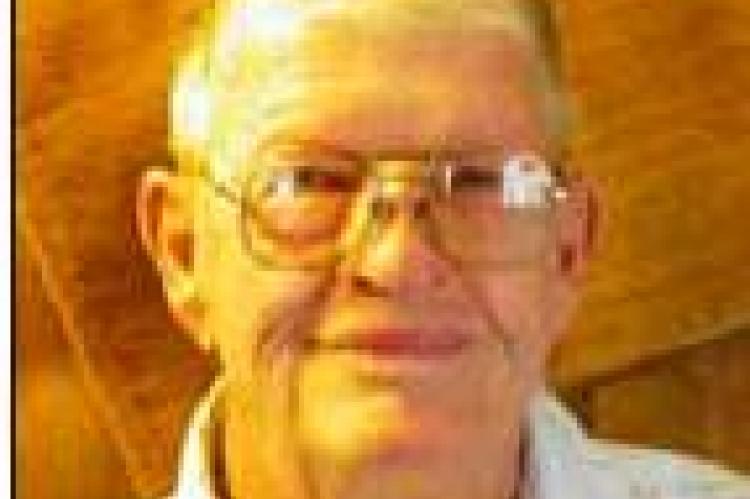
Three time Conservation winner Jack Rathbun.
cow-calf operation, is located 12 miles south of Ellsworth in Thomas Township.
“This is land my grandfather (George Rathbun) homesteaded in the 1880s,” Rathbun said.“At that time, he acquired the land, about three-and-a-half sections of grassland, through the railroad.”
Rathbun’s dad, M.M. “Lank” Rathbun, eventually acquired a section and a quarter of that land, with Rathbun, himself, acquiring the land in the late 1940s and early 1950s.
“There isn’t very much cropland on there,” Rathbun said.“Probably 600 acres of it is grassland. Ninety-nine percent of it is natural grass.”
Rathbun said he has a simple philosophy when it comes to conserving his grassland — take some, leave some.
He said under normal conditions, the grassland is leased at a rate of seven acres per cow and calf.
“If they were yearlings or something like that, we’d go down to maybe four acres per critter,” he said. “We hope the weather is good enough to support it at that rate.”
Rathbun said conservation is a must.
“What I like to do is distribute the water situation over the grassland, so there isn’t just one source of water,” he said.
These include ponds and windmills.
Rathbun said if there is just one source of water available to the cattle, the grassland in proximity to the water source will suffer.
“They are going to eat as close to the water as they can,” he said.“If you have water distributed to the pasture, then you’re going to graze the whole pasture.”
Rathbun said if an operator manages the grassland properly, they won’t have many weeds to control.
“But once you graze the grass down to nothing, the weeds are going to take over the pasture,” he said.
While he avidly subscribes to conservation practices, Rathbun said whatever his neighbors wish to do on their own ground is their business.
“I’m more concerned about how our operation is going to preserve the grass through conservation,” he said.
One problem Rathbun deals with is musk thistle.
“It’s an ongoing operation in the spring to control that,” he said.
While he doesn’t have much of a problem with cedar trees growing in his grassland, Rathbun does have to deal with locust and hedge trees.
“That’s quite a chore just to keep them under control,” he said.
Locust and hedge trees contain thorns which cattle find hard to eat around, so they shy away from them.
“This last year, we signed up for a program to eradicate the larger ceder and locust trees,” Rathbun said. “As they were taken down, they were treated to keep regrowth from occurring.”
Recently, Rathbun cut down 118 smaller hedge and locust trees growing in his grassland.
It’s all in a day’s work for this dedicated preserver of the land.