
The Good Shepherd
This upcoming Sunday is often referred to as the “Good Shepherd Sunday”. The Gospel for the day comes from the beginning of John 10 where Jesus states that He is the Good Shepherd. In order to get the full and accurate meaning of John 10, we must look at the context of this account.
First of all, there is the cultural context of caring for sheep in First Century Israel. For the most part, shepherds grazed their sheep on marginal land that no one claimed. Just think of the open range grazing of the ranchers of the pioneer days of the United States. Only we are talking sheep instead of cattle.
In order to provide protection at night, several shepherds would work together to clear an area of stones. They would use the stones to build an enclosure to keep out predators. The enclosure would have one opening for the sheep and their shepherds to get in and out.
At night one of the shepherds would lie down in the opening. He would literally become the door to the enclosure. No sheep could get out without stepping across the body of the shepherd. If a wolf wanted to get at the sheep, it had to go through the shepherd. When Jesus states that He is the door of the sheep, He is telling us that He is the Good Shepherd who guards the entrance to His flock with His body. This is an excellent word picture when we think that it is Jesus’ body on a cross that saves and protects us from sin, death, and the power of the devil.
When the morning came, each shepherd would call his flock. When the sheep heard the call of their shepherd and their shepherd only, they came out. They followed their shepherd by listening for his voice. By working with the sheep out in the pasture all day and talking to them, the sheep came to know the voice of their shepherd. They would not follow any other voice.
Martin Luther gives an excellent example of what it means to hear the Good Shepherd’s voice in his explanation to the Third Commandment. We should fear and love God so that we do not despise preaching and His word, but hold it sacred and gladly hear and learn it. Those who hear the Good Shepherd’s voice have a hunger that can only be satisfied by the Word of God.
There is a second part to the context of this morning’s Gospel. When Jesus stated that He was the “door of the sheep,” He was speaking to a man who was once blind, some Pharisees, and a crowd. Jesus spoke these words shortly after He gave sight to a blind man on the Sabbath.
The account of this restoration occurs right before this account. A man was born blind. Jesus spit into some dust and made some mud. He applied the mud to the man’s eyes. Then He told the man to wash His eyes in the “Pool of Siloam”. The man did as Jesus said and received his sight.
All would have been well if it weren’t for the hypocrites among the Pharisees. Jesus had performed this sign on the Sabbath and the Pharisees, rather than rejoicing that the man could see, were disturbed that Jesus had worked on the Sabbath. Eventually, the Pharisees condemned Jesus and, as for the man who had received his sight, they threw him out of the synagogue. By then, the man didn’t care because his faith was in Jesus and not in the Pharisees or the synagogue.
Jesus condemned the Pharisees by declaring that, even though they claimed to have spiritual insight, they were spiritually blind. And because they insisted that they had spiritual insight, their guilt remained. Then He began the teaching about the Good Shepherd. Therefore, when Jesus said, “Truly, truly, I say to you, he who does not enter the sheepfold by the door but climbs in by another way, that man is a thief and a robber.” He was speaking directly to the Pharisees who condemned Him and who had thrown the man out of the synagogue. He was saying that they were the thieves and robbers.
Jesus Christ is the Good Shepherd. He is the one whose body is the door to salvation. It is He who calls you by name. He has done all that you need. And He has done it so that you can live with Him forever.
Pastor’s Podium
The Pastor’s Podium column is offered each week by a different pastor or lay person representing an Ellsworth County church.
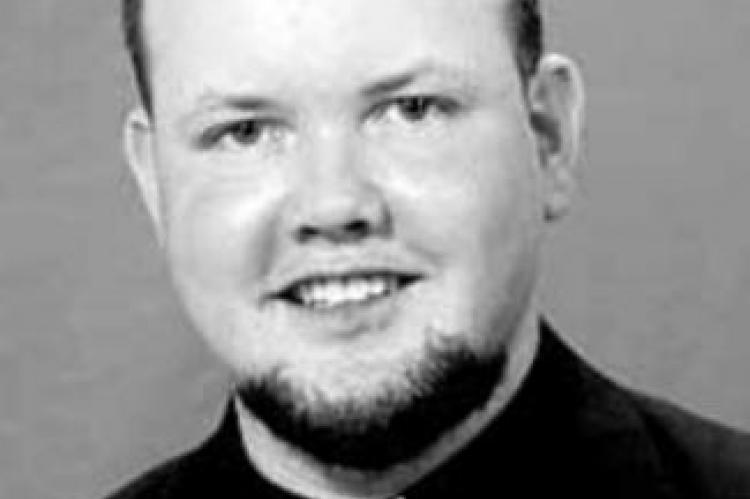
The week’s columnist is Daniel Harders, pastor at the St. Peter Lutheran Church, Holyrood.