
Grilling food safety
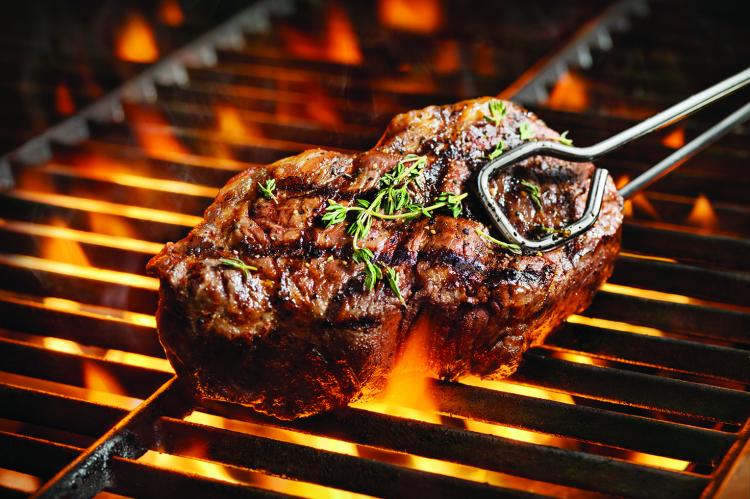
This weather makes it officially summer! And summer means grilling — specifically grilling meat. So, let’s talk food safety as it relates to those grilled favorites. The doneness of your meat should never be based on color. Instead, make a food thermometer your favorite utensil at the grill to ensure you are cooking meat to the recommended minimum internal temperature.
For the three most common types of grilled meats, those recommendations include:
• Steaks, chops and roasts — 145° Fahrenheit.
• Ground meat — 160° F.
• All poultry — 165° F.
A food thermometer should be inserted into the center of the thickest part of the meat, away from bone, fat, and gristle. For hamburger patties and other ground meat items, insert into the side so that the thermometer is positioned through the center of the food.
It’s easy to get overwhelmed when shopping for food thermometers. When checking food temperature, a digital or dial food thermometer is best. Digital thermometers can sense temperature at the tip of the thermometer probe and give a quick temperature response.
Be warned, though, that digital thermometers cannot be left in food while cooking.
Some food thermometers have a temperature probe that is connected to a separate digital display. Use one designated for high heat when grilling.
Please keep these other food safety tips in mind while enjoying outdoor grilling season:
• Use separate plates and utensils for raw meats and cooked meats.
• Keep hot foods hot and cold foods cold. Hot foods should be maintained at a temperature above 140° F, while cold foods should be kept below 40° F.
• WASH your hands frequently, especially after handling raw foods, before and during meal preparation, and before eating. Hand sanitizer has its place, but not while cooking and grilling ... Wash your hands with soap and water!
• Prepare several ice chests to keep food cold and to separate items. Keep beverages in one chest, ready-to-eat foods in another, and raw meats in a third.
• Do not wash meat or poultry before cooking as it increases the chance for crosscontamination. Cooking meat to the recommended internal temperature is essential.
Some non-food safety tips include positioning the grill away from flammable areas, checking the charcoal or gas supply so you don’t run out while preparing meals, and keeping children and pets away from a hot grill.
For more information on food safety, please contact a Midway Extension District office.
Jessica Kootz is the Family and Consumer Sciences Agent in the Midway Extension District. For more information on this article or other Family and Consumer Sciences related questions, email Jessica at jessicak@ksu.edu or call a Midway Extension District office at (785) 472-4442 or (785) 483-3157.